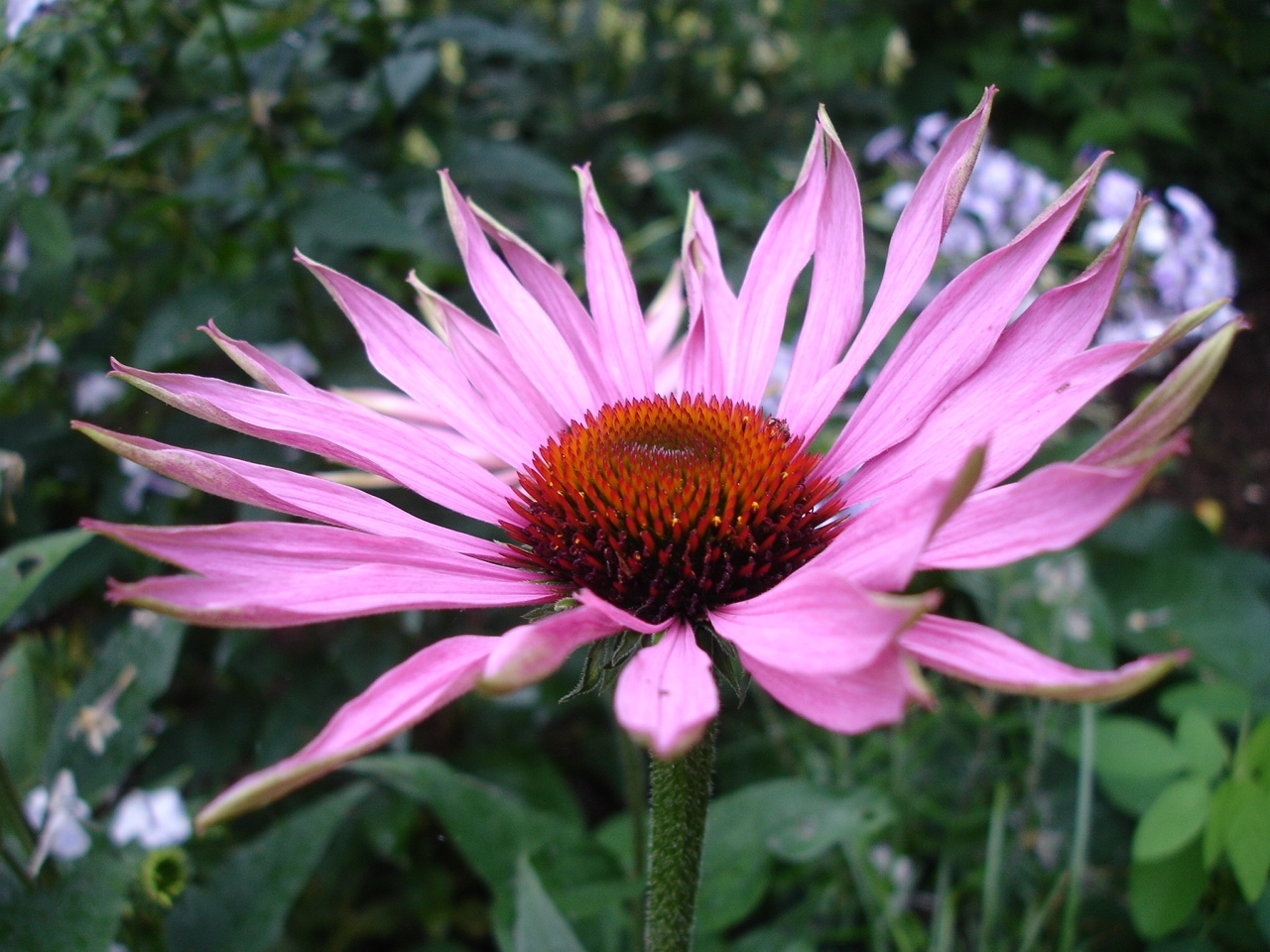
Echinacea /ˌɛkɪˈneɪʃiə/ is a genus of herbaceous flowering plants in the daisy family. It has ten species, which are commonly called coneflowers. They are found only in eastern and central North America, where they grow in moist to dry prairies and open wooded areas. They have large, showy heads of composite flowers, blooming in summer. The generic name is derived from the Greek word ἐχῖνος (ekhinos), meaning “sea urchin”, due to the spiny central disk. These flowering plants and their parts have different uses. Some species are cultivated in gardens for their showy flowers. Two of the species, E. tennesseensis and E. laevigata, are listed in the United States as endangered species.
In addition, studies have linked echinacea and their compounds to many health benefits, such as reduced inflammation, improved immunity and lower blood sugar levels.